Westminster knocks out Scotland’s rocket launch
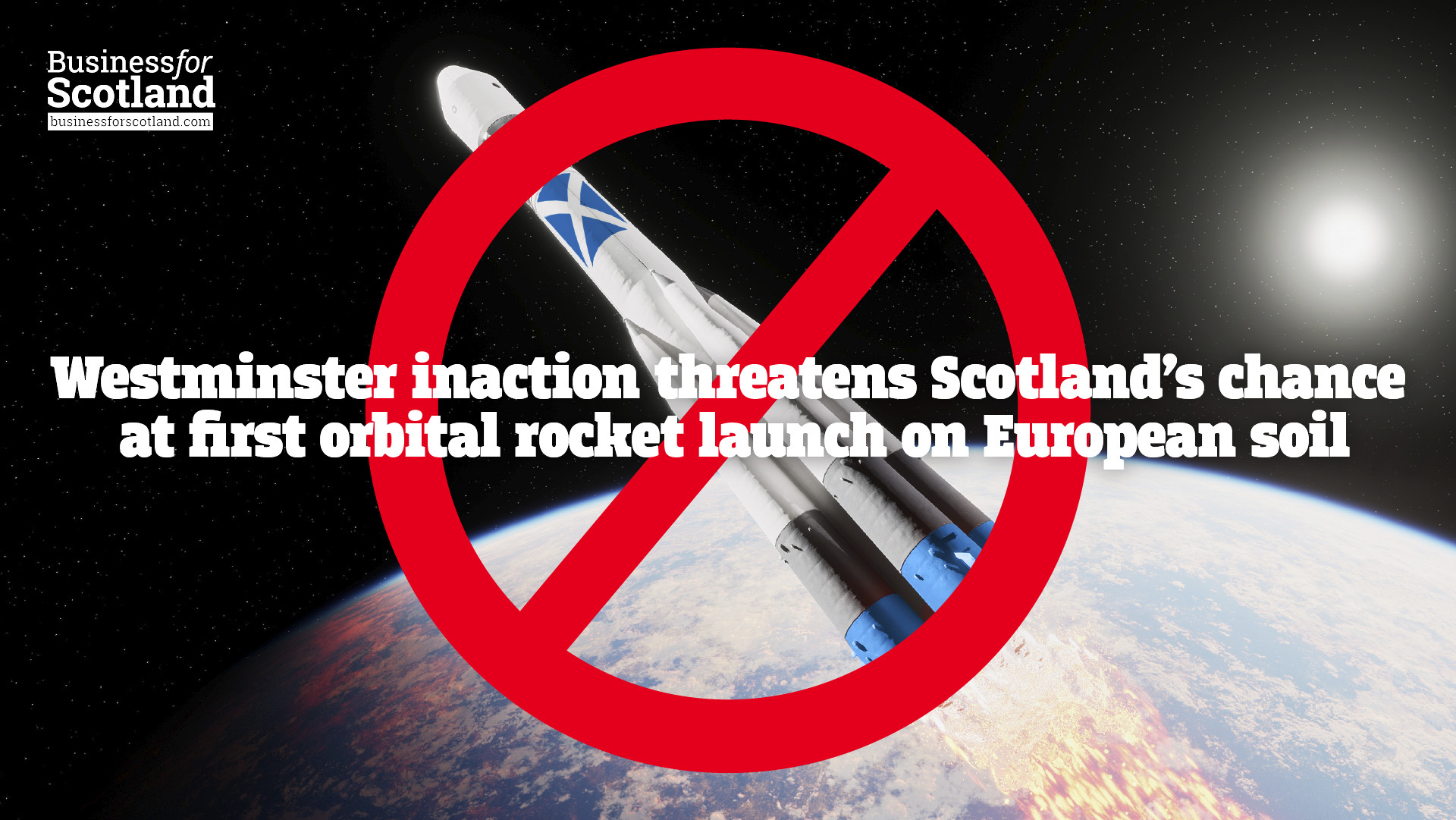
Scotland’s chance to lead Europe in small-satellite launch is under threat. The Scottish Affairs Committee couldn’t have put it plainer this week: our “first-mover advantage” is being knocked back by a UK Government that won’t match the sector’s pace with sustained, strategic backing.
This is a sector of innovation and energy - but Westminster has little attention to spare for Scotland. As always, we have to wait patiently for crumbs from England’s table. Meanwhile Norway is moving to take the opportunity to get into the lead.
What’s so frustrating is that we have such a strong base to build on if only Scotland held the purse strings and the decision-making power to do it:
- Glasgow has built more small satellites than any other city in Europe;
- When it comes to space-related analytics, Scotland has the largest centre for informatics in Europe and more than 170 data science companies
- On sustainability we lead too, with a carbon-neutral spaceport in development at Sutherland and green fuels that cut lifecycle emissions dramatically.
- On infrastructure, five of the UK’s seven developing spaceports are here - Shetland (SaxaVord), Sutherland, North Uist (Spaceport 1), Machrihanish and Prestwick - with SaxaVord the most advanced. It has the spaceport licence and range licence in place; Rocket Factory Augsburg (RFA) holds a UK launch operator licence; and, in August, Skyrora became the first UK-based company to secure a CAA launch licence.
- Scotland punches above its weight on employment in the UK space sector. Earlier assessments put Scotland at 18% of the UK space workforce; the latest official report still has us outperforming our share of companies, with 13% of employment - evidence of a dense, productive cluster that could scale quickly with the right incentives.
Yet despite these wins, there still has not been a vertical orbital launch from Scottish soil. The Committee’s timeline shows how close we are, and how fragile momentum can be when government support is lacking.
Meanwhile, Norway’s Andøya and Sweden’s Esrange are not waiting politely for Westminster to get its act together.
Reuters news service reported recently:
“Two small spaceports in the far north of Sweden and Norway are racing to launch the first satellites from mainland Europe into space as the region looks to reduce its reliance on U.S. players. U.S. President Donald Trump's "America First" policies and the war in Ukraine have prompted Europe to ramp up its independent capabilities in a variety of ways."
Secure access to space is critical to defence and resilience. Government after government in Europe is treating launch as national infrastructure.
But Westminster didn’t get the memo. When funding does arrive, it’s piecemeal and not enough. The UK has put money into individual projects - Orbex’s rocket programme among them - but the Scottish Affairs Committee report warns this patchwork approach underweights what our competitors treat as strategic infrastructure.
The remedy is simple: a long-term investment plan and an “anchor customer” commitment so Scottish launch providers have predictable demand to scale against.
That’s how nations that are serious about investing in their potential do it. But we have seen time and time again that Westminster is not keen for Scotland to become the strong, prosperous country it has the potential to be. It is at best ambivalent about Scotland’s success in anything. Too many UK politicians prefer to see Scotland as a supplicant, waiting for handouts.
So, when it comes to Scotland, Westminster can’t or won’t provide joined-up thinking. In August, Skyrora got its licence only to find no pad availability this year at SaxaVord and is now scoping launches overseas. That is a result of a fragment, piecemeal, parsimonious approach that is not outcome focused.
Yet again, Scotland does the hard yards, and then has to watch the economic upside take off from somewhere else. That’s not a market failure; that’s a policy failure.
This is where independence stops being an argument about flags and starts being a very practical argument about levers of power. With full economic and regulatory levers, Scotland could:
-
Commit multi-year capital to pads, range and test facilities across Shetland, Sutherland and the West, de-risking private build-out.
-
Act as an anchor customer for launch and data-tasking Scottish-built satellites to monitor fisheries, peatlands, coastal erosion and grid resilience, putting public missions on a predictable cadence.
-
Streamline licensing with a single-front-door regulator designed around responsive launch, and align procurement with our net-zero goals-incentivising low-carbon fuels and reuse as default, not afterthought.
- Partner directly and nimbly with European programmes and agencies on earth observation and climate services, turning Scotland’s data strength into exportable public goods.
Scotland has built the ecosystem: satellite building capacity, data analytics, spaceports and the sustainability investors and governments are looking for. With the right government support, Scotland can be a European leader in this sector.
But if we keep patiently waiting on Westminster to step up, we’ll see that launch window close as the industry moves on, first to Norway, then to everywhere else. The rockets are ready. The talent is here. The only thing still on the pad is political will.
Support the work of Believe in Scotland and our independence campaign – Join us! Only a non-party-political independence campaign can move independence support to the levels we need to win our independence.