The UK’s Fish Fund - Another Slap in the Face to Scottish Industry
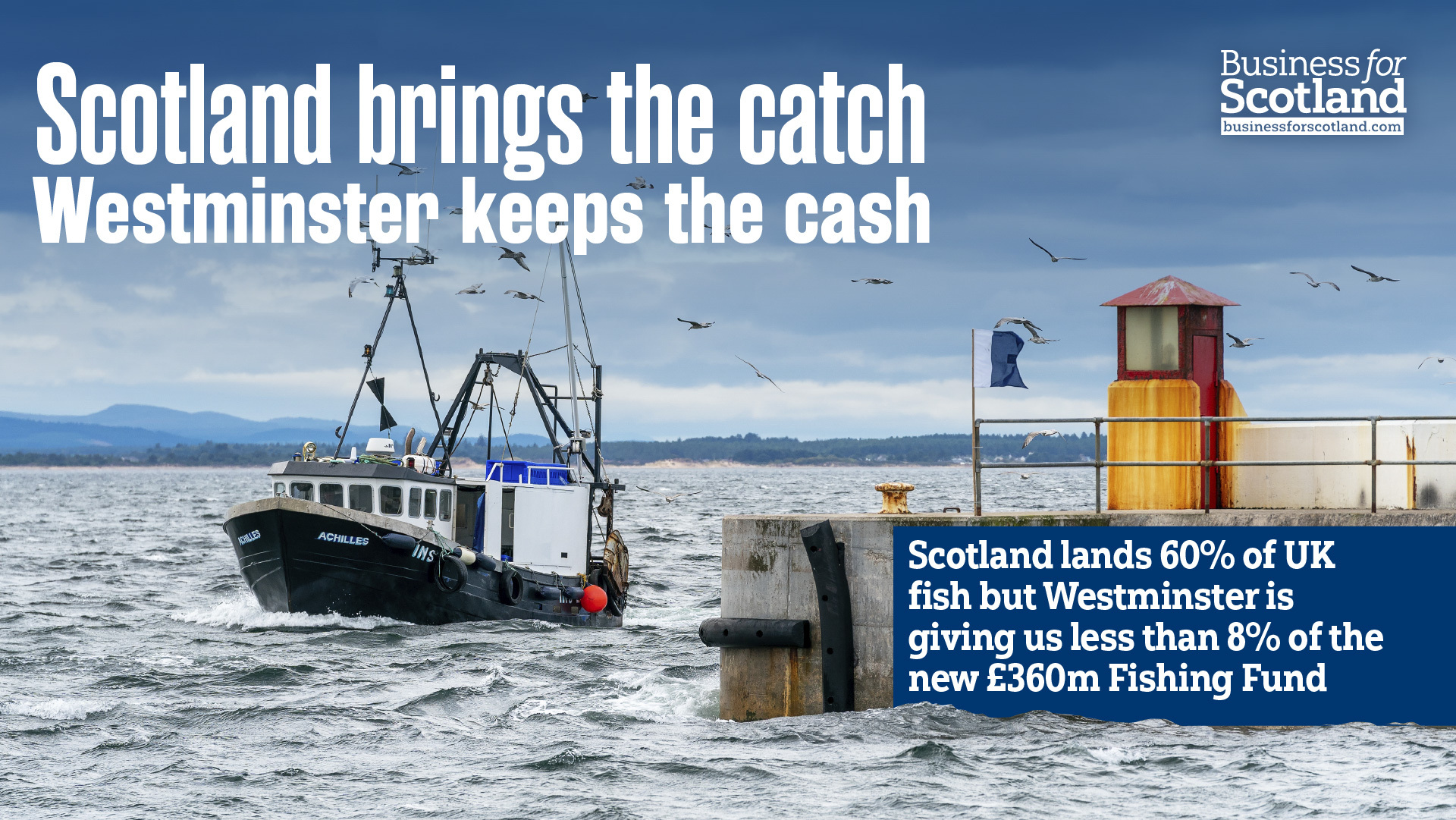
When we were in the EU, Scotland got almost half of the UK’s fishing funding. The UK’s replacement fund is slashing that amount. Instead, it gives Scotland a population share - less than 8%.
Shetland alone lands more fish than the whole of England, Wales and Northern Ireland - yet it is to take just crumbs from Scotland’s measly portion.
Scotland contributes disproportionately when it comes to resources - fresh water and the sea, energy, exports, food and drink and especially fish. But we are told to be grateful for giving control of these to the UK and getting back a ‘per head’ share of funding,
Ten key facts about the funding row
1 - The UK has announced a new fishing fund
The UK’s Environment Minister Angela Eagle announced that a new £360 million Fishing and Coastal Growth Fund will distribute funds to the devolved nations on a population basis. This means Scotland will receive just 7.78% of the money.
2 - This ignores the fact that Scotland’s fishing industry generates more than half of the income
This is despite the fact that Scotland accounts for almost 70 per cent of total UK landings, 63 per cent of the value, and 61 per cent of total catching capacity. In August alone, Scotland’s vessels landed £52 million worth of fish — more than triple England’s total.
3 - The EU fund that this new fund is replacing gave Scotland’s fishing industry half
The Fishing and Coastal Growth Fund was designed to replace the European Maritime and Fisheries Fund, which provided support for modernising fleets and regenerating coastal communities. Under EU membership, Scotland received roughly 46 per cent of UK fisheries funding - which was a wee bit less than we should have received but was more in line with the reality.
4 - Westminster has swallowed all of the post-Brexit powers and most of the cash
Now, after Brexit, which Scotland overwhelmingly rejected, London has decided to allocate the new fund using the population-based Barnett formula. As always, it claims Scotland should be grateful because it gets a tiny bit more per head than most of the English regions. But the per head calculation does not take into account Scotland’s much larger share of natural resources, the vast majority of which are firmly under Westminster’s control.
5 The “most powerful devolved parliament in the world”? Not in real life
Scotland’s Rural Affairs Secretary Mairi Gouegoun, or anyone else in the Scottish Government or the Scottish fishing industry was not consulted over this decision. It was announced within hours of the Scottish Government being told. Scotland’s so called government was not in the room where it happened. Devolution gives Scotland responsibility for the health of its coastal communities but no control or even any say or the right to be consulted over the funding that sustains them.
6 - The Scottish Secretary Douglas Alexander has done nothing to stick up for Scotland
During an Urgent Question, MP Brendan O’Hara asked fisheries minister Dame Angela Eagle whether Scotland’s Secretary of State, Douglas Alexander, had even spoken to her about the decision. Eagle refused to answer. Instead, she offered a deflection about post-Brexit quota uplifts, claiming Scotland had already “got a reasonable deal.”
7 - There has been cross-party condemnation of this decision
Labour’s Torcuil Crichton, MP for the Western Isles, said that the “fairness of geographical distribution” must be reviewed. Liberal Democrat Alistair Carmichael called the use of the Barnett formula “ocean-going madness,” noting that Shetland alone lands nine per cent of the UK’s fish while Scotland as a whole gets only eight per cent of the fund. Even Conservative MP Harriet Cross said it “makes no sense” that a country producing 60 per cent of the value of UK fishing should receive less than 8 per cent of the investment.
8 - The Scottish fishing industry is furious
The Scottish Fishermen’s Federation called the decision “grossly unfair” and “a drop in the ocean.” in terms of the needs of the support needs of the industry. The SFF pointed out that the fund itself was designed to placate an industry betrayed by Brexit, after ministers “gave away 12 years of access to UK waters to EU vessels” - access worth an estimated £6 billion.
9 - Weirdly BBC Scotland - our publicly funded broadcaster - has only reported it online
The morning after this huge story broke, the BBC found time on Good Morning Scotland for a long item about changing school holiday times. But the news about the slashed fishing funding which has caused so much anger and on which several prominent politicians have issued strongly worded statements did not make the cut.
10 - An independent Scotland in control of our resources could do things differently
How often is Scotland told that we get more money ‘per head’ back from Westminster than English regions and we should be grateful? The time has come to stop accepting this old chestnut. An independent Scotland would control all of our resources. It could design a coastal investment strategy that supports the areas that actually fish, process, and export seafood, creating value where it’s earned.
Conclusion
Scotland’s natural resources fuel the UK, yet our industries are left fighting for scraps from our own wealth. Westminster's actions show control, not cooperation and devolution has become the art of managing decisions made elsewhere. True fairness and a future where Scotland’s resources serve Scotland’s people, will only come when we take the decisions here, in Scotland, as an independent nation.
Scotland is growing tired of being lectured by London about its “dependence” on the Union. Independence isn’t a risk to Scotland’s economy. It’s the route to finally managing it.
This is the moment to relight the fire for Scottish independence but we need your help to do it: https://www.believeinscotland.org/crowdfunder2025