The UK budget FAILS Scotland
The UK Chancellor has delivered a few crumbs for Scotland in her budget. These are making headlines in the Unionist media.
Meanwhile Scottish businesses continue to get pushed to the wall by outrageous energy prices and the deepening damage of Brexit. These, combined with self-inflicted fiscal rules, have caused the budget “black hole” in the first place.
If Scotland were an independent country, we would have our own Treasury. We could make decisions in Scotland’s interests, instead of waiting for an afterthought from a neighbouring country which has limited interest in the consequences for Scotland of its choices.
Here are three ways the UK budget is just another FAIL for Scottish business.
1 - A FAIL on the energy transition - “accelerated collapse” is not what was promised
The UK Chancellor announced £14 million for Grangemouth - at the same time as trumpetting about how her government kept important English industrial sites open. Cynics may ask if this is like the £200 million promised from the National Wealth Fund, which has been branded “fantasy money” after failing to materialise.
But the budget did nothing to address the alarming, deliberate and ongoing shutdown of Scotland’s oil and gas industry. Westminster’s policies are leading to an “accelerated collapse”. That is not what Scotland was promised.
For the Port of Aberdeen - one of the clearest real-time barometers of offshore activity - the downturn is already here. Chief executive Bob Sanguinetti told The Herald:
“Oil and gas jobs are disappearing at a rate of almost 1,000 a month, and new opportunities in renewables are not materialising quickly enough. We risk being stranded between two energy eras. If we lose the people and skills needed to power the energy transition, the opportunity will sail past our shores.”
David Wilson, Aberdeen Office Managing Partner at Johnston Carmichael, says the "persistent instability and policy ambiguity" is "driving investment overseas at a pace we have never recorded before".
Currently, the Fife Ethylene Plant at Mossmorran is also facing closure with the loss of 400 jobs. In a statement, owner Exxon said it had “tested the market” for a potential buyer, but the UK’s “current economic and policy environment combined with market conditions, high supply costs and plant efficiency” meant it had been unable to secure the site’s future.
Scotland’s oil wealth has been managed in a short-term, incompetent way that has left little long term benefit. Compare Aberdeen to any other oil capital. Compare what Norway has achieved with its sovereign wealth fund. Now we see that the winding down of this industry is going to be done in the same selfish, London-centric, anti-Scottish style.
The Energy Profits Levy, first introduced as a temporary measure by Rishi Sunak, which did raise more revenues has now become a permanent deterrent to investment and is lowering net Government revenues (from Scotland). Firms operating in the North Sea face a combined tax rate of 78% - more than triple the UK’s standard corporation tax - making Britain one of the least competitive energy regimes in the world.
The Fraser of Allander Institute warns that if this decline continues, Scotland could lose £4 billion in annual output by 2035 - almost 2% of its economy - with the North East hardest hit.
We’ve been here before: after the 2015 oil price crash, the regional economy contracted by 13% while the rest of Scotland grew. The management of the oil sector by the UK has generally been indifferent or even hostile to the interests of the workforce in Aberdeen and the North East - Norway had a bigger but more consistent tax take over time but lost far fewer jobs when the oil price fell.
A repeat would devastate communities from Aberdeen to Shetland. But that is what this budget means. There was no mention of this.
Far from managing a just transition, Westminster is presiding over an unjust collapse - taxing away the investment that could have built the next generation of Scottish energy and exporting the jobs, skills and wealth our country needs to thrive.
2 - A FAIL on energy fairness
For years, the UK Government has promised to reform the broken energy pricing system that punishes Scottish households - but nothing has changed. The Chancellor announced £150 off the “average” bill. She probably does not know - or care - that large areas of Scotland that depend on electricity pay double the average. Even for those average homes, the increase that has already happened since Keir Starmer took office is more than £300 and bills are still going up.
In a letter to the Chancellor ahead of the Budget, Deputy First Minister Shona Robison warned that 34% of Scottish households - more than 800,000 homes - are now living in fuel poverty. She urged Westminster to use its reserved powers to introduce a social tariff and rebalance policy costs between gas and electricity, making clean heat affordable while cutting bills for low-income households.
Without structural reform, Scottish families are being ripped off by the UK’s privatised energy system, forced to pay the highest energy prices in Europe despite living next to the resources that power the grid. The same goes for Scottish businesses who pay the highest commercial energy prices in the world.
This failure to bring in a social tariff isn’t just a social injustice - it’s an economic one. The absence of a social tariff deepens fuel poverty, drains disposable income from communities, and undermines Scotland’s businesses.
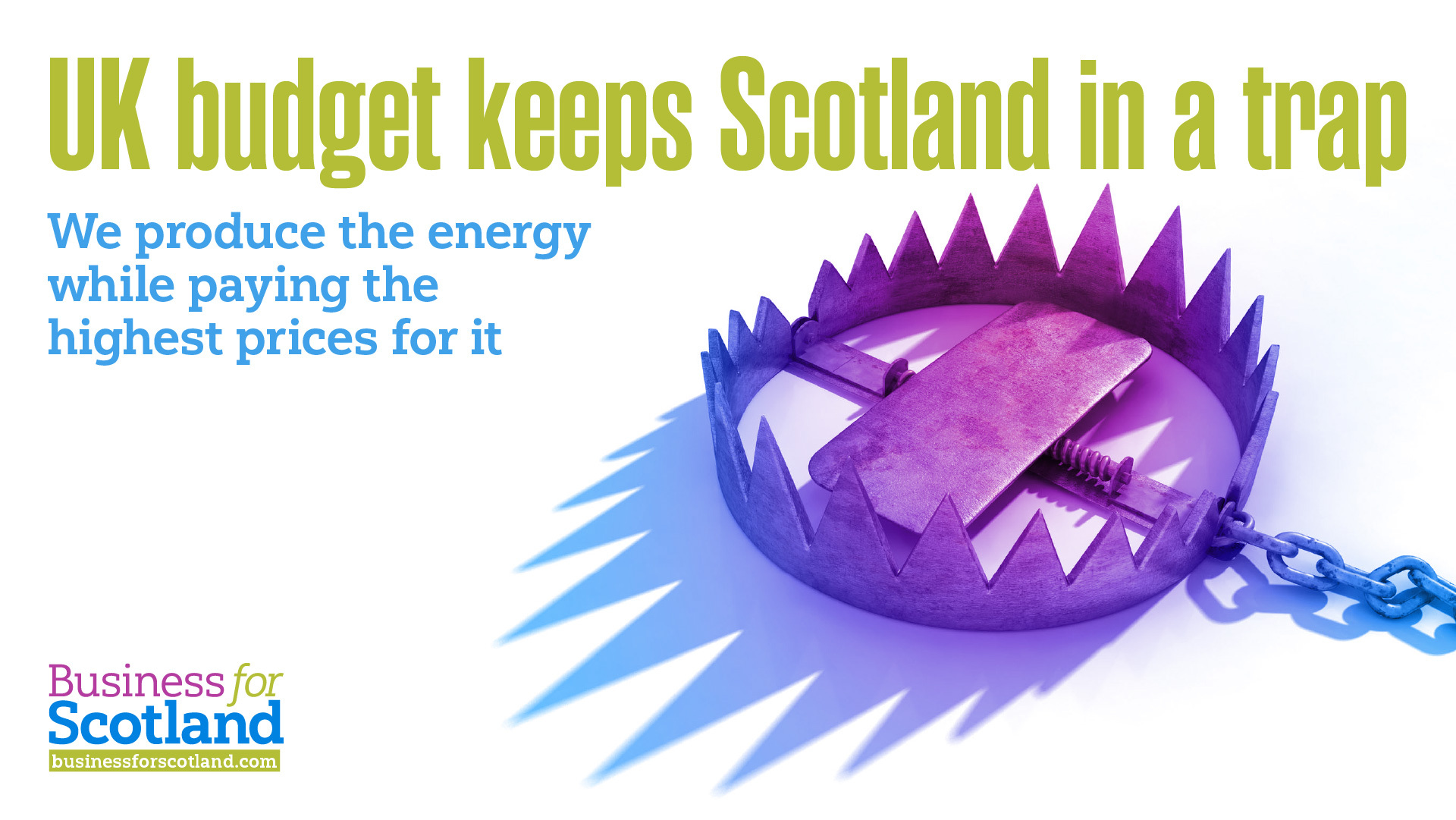
Thanks to Westminster’s decisions, Scotland’s energy-rich economy is trapped in a vicious paradox: producing the energy, paying the highest prices, but without the power to fix this. This latest UK budget is just one more fail on that score.
3 - A FAIL on addressing the Brexit damage
This UK government said it would increase growth - but it has failed to address the major cause of the UK’s sluggish economy, weak productivity, and rising borrowing costs. They all stem from a political project Scotland never voted for but is still footing the bill for.
A recent report by Cambridge economists found that, by 2035, the UK is anticipated to have three million fewer jobs, 32% lower investment, 5% lower exports and 16% lower imports, than it would have had if the UK had not left the EU.
That’s why the Chancellor had so little room to manoeuvre: the so-called “fiscal black hole” is in large part a Brexit black hole, created by lost trade, falling migration, and lower growth.
Scotland’s exporters, especially in food and drink, have been hit hardest. New barriers to trade have hammered small producers and cut off access to European labour - the lifeblood of key sectors like agriculture, hospitality and care. Even the Office of Budget Responsibility admits that Brexit has permanently reduced the UK’s potential output, yet Westminster still refuses to face the truth: there is no path to strong public finances without fixing the single biggest drag on economic performance.
The Budget offered no plan to repair this damage. Instead, it locks Scotland into a low-growth UK economy where every Budget begins with cuts and ends with excuses.
While the rest of Europe is rebuilding industrial strength through cooperation and green investment, Westminster remains stuck defending the indefensible. Scotland deserves better than being collateral damage in a failed Brexit Britain.
Conclusion
Year after year after year, Scots have to tune in to a budget planned in London on the basis of the needs and political impulses of a different country.
The oil and gas industry that did so much to power the UK for the last half-century is being betrayed, pushed into a sudden collapse that will damage the Scottish economy. So much for the green transition.
Scotland is an energy-rich country that is forced to pay the highest energy prices in the developed world. These suck money and opportunity out of Scottish communities. That hurts business as well as households.
Scotland outperforms the rest of the UK in terms of exports. It voted to remain in the EU which was so important for business here. But that democratically expressed wish was contemptuously ignored by a UK government that did what it always does. It did it again in this week’s budget - put London first.
How long will Scotland have to sit and watch while the levers of power are operated in a different country by a regime that has little interest in a country only allocated three per cent of seats in its Parliament?