Shipbuilding shows why Scotland has reached the limits of devolution
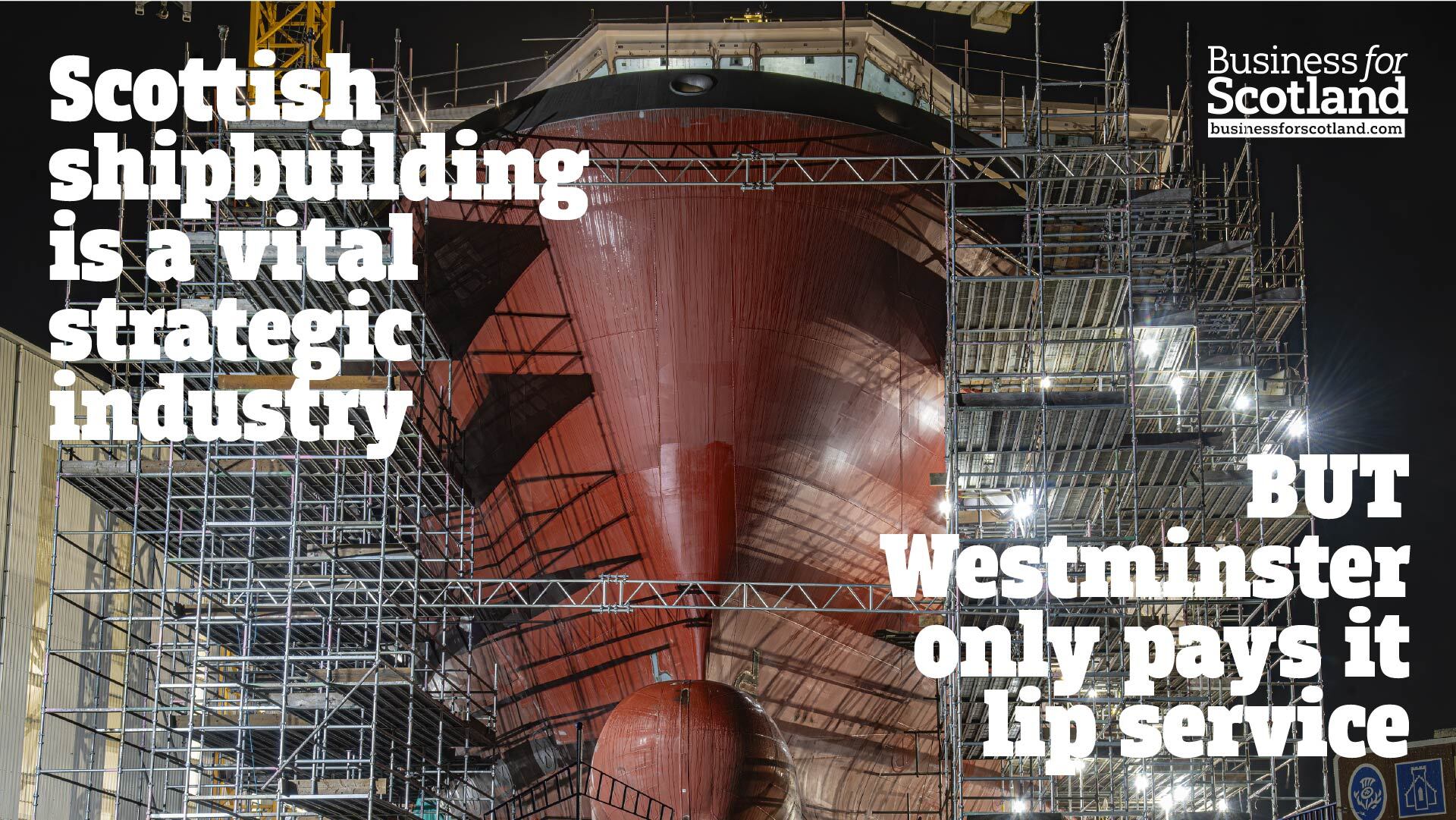
The skill and commitment of Scotland’s shipbuilding workforce can compete with the best in the world. But for half a century the industry has been let down by the UK - it doesn't play on a level playing field.
A BAE Systems £10 billion deal with Norway to supply five Type 26 frigates of a design commissioned by the Royal Navy is a big win for the Clyde. But at the same time, Scotland’s shipyards stand to lose out on billions of civil contracts because of a Westminster finance model rigged against them.
The poisonous attacks on Ferguson Marine by Unionist politicians show a complete lack of understanding of the wider context. For half a century, Scotland’s shipyards have not been on a level playing field - and only with independence can Scotland change that. For example, Spain has a tax-leasing model. This allows investors to effectively borrow the vessel for five to eight years, and then buy it at the end of the period. It offers Spanish shipyards an effective 20% discount, funded by tax savings.
In contrast, Scotland’s publicly owned yard Ferguson Marine was trapped in a vicious cycle while building the controversial liquefied natural gas-fuelled ferries Glen Sannox and Glen Rosa (the world’s first dual fuel ferries).
Ferguson Marine was too strapped for cash to redesign the vessels and so were forced to continue building to unlock the next tranche of money, even when flaws were obvious – as it was being funded through milestone-based payments.
That trapped the yard in a vicious cycle - desperate to keep the cash flowing and the operation running.
Instead of understanding the underlying issues that lay behind this, Scotland’s Unionist media has mounted continued attack after attack on the yard - most recently by Douglas Alexander at the Labour Party Conference who listed “ferries” as a Scottish failure.
But while other countries view shipyards as vital national infrastructure and back them with a range of financial instruments, Westminster insists that commercial banks are the only option - leading to Ferguson being outbid by other countries on ferry contracts.
Its bid for seven electric ferries for CalMac was undercut by a yard in Poland earlier this year.
Now Ferguson Marine is staring at an empty order book - without the safety net that state-backed shipyards in independent countries enjoy.
Across Europe, the playing field is not level - Scotland is playing at a disadvantage
While other countries treat shipbuilding as essential national infrastructure and use loans and other financial instruments to smooth out the inevitable peaks and troughs of demand, the UK declines to do that for Scotland.
-
Germany kept Meyer Werft afloat with a state lifeline to preserve capacity.
-
Spain’s tax-leasing gives yards an effective 20% price reduction
- Norway, Poland, Turkey: state investment banks routinely provide long-term loans and refund guarantees as standard.
The result is that Scotland’s yards excel on defence contracts but they are starved of vital civil work - ferries, offshore support, research and service vessels - because finance, not steelwork, decides the tender.
MSP Paul Sweeney, from a shipbuilding family and a former employee of BAE systems, raised the issue in Holyrood last week. He wants to see the laws changed at both Holyrood and Westminster on public procurement to allow more state support for Scotland’s yards.
But Scotland is not an independent country - it doesn’t have borrowing powers or the financial levers required to do what other European countries do.
Media watchers will remember how the Scottish government was heavily criticised by many commentators over suggestions that it had tried to support Ferguson Marine’s bid for the two LNG ferries by giving more weight to the social and economic value of the work being done on the Clyde.
That isn’t partnership; it’s undermining Scotland. And it isn’t new.
For half a century, Westminster has run a finance model that leaves Scotland’s shipyards competing with one hand tied back. We are told to face a “free market”, while our European rivals arrive with state-backed loans, builder’s refund guarantees and tax-leasing structures that de-risk complex civil orders.
In the early 1970s, Upper Clyde Shipbuilders asked for a modest £6 million loan to steady their books. The first UK government elected in England but not in Scotland said no - they gave nothing. Edward Heath, the first PM elected in England but not Scotland, ignored the request and went yachting instead. Workers led by Jimmy Reid staged the legendary work-in to prove the point: it wasn’t the workers that failed Scotland - it was Westminster.
Scotland has the talent. Westminster withholds vital backing.
The Clyde and Rosyth have strong naval orders - Type 26, Type 31, plus the Norway export.
But without a proper finance stack - builder’s refund guarantees, patient capital, tax-efficient leasing - Scotland will keep losing civil contracts to state-backed rivals. Yards are pushed into milestone-cash doom cycles, building before designs are frozen just to trigger payments. That’s not the yards’ fault; it’s a finance architecture failure.
What independence would change
An independent Scotland would have the financial and policy levers of an independent country. It could use them to:
-
Create a Scottish Ship Finance Agency. Issue builder’s refund guarantees and performance bonds as standard, plus long-tenor, low-cost loans so yards can bid for civil work with confidence.
-
Introduce a Scottish green tax-leasing regime. A lawful, investment-grade structure for ferries and clean-tech vessels that delivers a real headline price reduction—our answer to Spain’s edge.
-
Write a National Shipbuilding Strategy for Scotland. Sequence naval, ferry, offshore and research orders to keep slips full year-round; publish a rolling 10–15 year pipeline.
- Procure on whole-economy value, not the individual price. Prioritise: jobs, apprenticeships, supply-chain spend, regional value-add, export potential.
-
Run the yards as one ecosystem. Treat BAE (Clyde), Babcock (Rosyth), Ferguson Marine and key fabricators as a coordinated group: shared specialist shops (pipes, sheet metal), common quality systems, and load-balancing between sites.
-
Turn surplus renewables into orders. Prioritise electric/hydrogen ferries, offshore support vessels and coastal freight under a Green Fleet plan - made in Scotland, powered by Scotland.
-
Export plan. Use the Ship Finance Agency to mirror export-credit tools, pairing finance + build slots and a trade team that sells Scottish capacity abroad.
Conclusion
For decades, Westminster policy has left Scottish yards competing without the backing other independent countries provide.
From the UCS work-in to today’s Clyde orders, the message is the same: it wasn’t the workers who failed Scotland - it was Westminster that failed Scotland.
Only independence gives Scotland the tools to back its own shipyards, win civil contracts, and build a future fleet at home.
This is the moment to relight the fire for Scottish independence but we need your help to do it: https://www.believeinscotland.org/crowdfunder2025